Collection:
Brakes
Filter
32 products
Brake and Derailleur Cable Cover End
Cable End
Ball brake cable
Adapter for Old Brake Lever (brake cover)
Standard brake cable
Brake Cable Clamp 28,6 mm
Brake Cable Clamp 25.4 mm
Black Brake Cover (1m)
Bicycle Brake Cover Silver (1m)
Brake Cover White (1m)
Brake Cover Brown (1m)
Standard Brake Pads - Pair
Brake Pads for Saccon Steel Wheels
Brake pads for Saccon Aluminium Wheels
Saccon BMX short brake levers
Red brake pads for classic bicycle rod brakes
DIA-COMPE Brake Cable Clamp 25,4 mm
Saccon Caliper Brake Set
Brake levers Saccon Silver - Chrome Pair
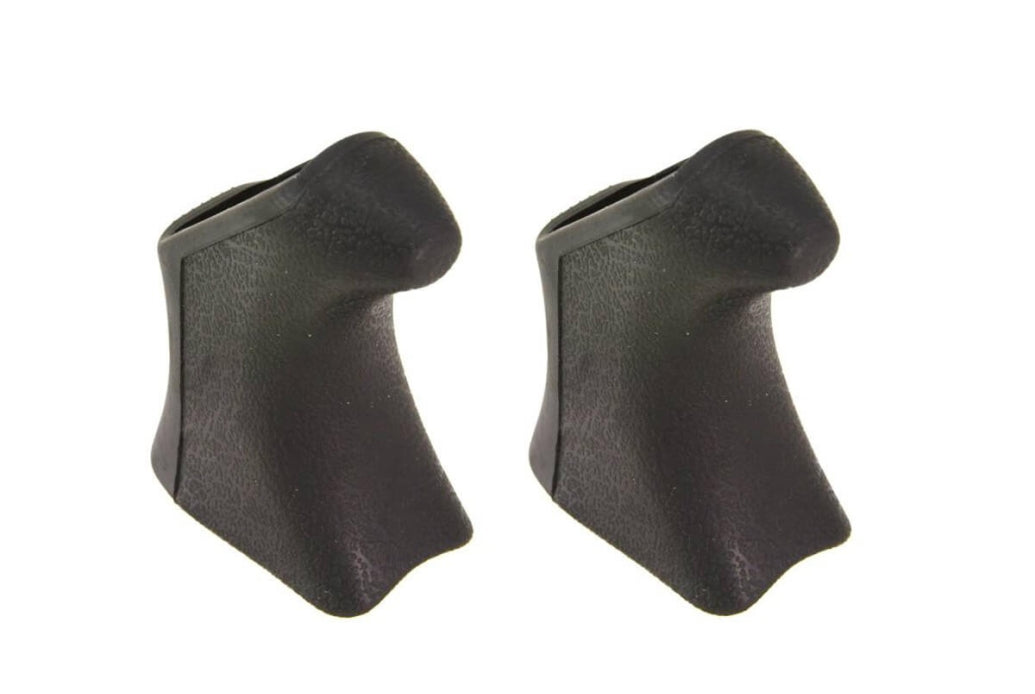
Saccon Classic Brake Lever Covers Road Brown (Top Exit)
Saccon Universal Brake Levers Black
Vintage Aluminium Road Brake Levers
Saccon Classic Brake Lever Covers Road Black
Saccon Classic Brake Lever Covers Road Brown
Bicycle brakes for city riding
Bicycle brakes
Brakes are one of the most important components on our bicycles, whether they are cruisers, city bikes, or mountain bikes… They allow us to ride safely and be able to brake in time to avoid traffic accidents, dodge an object on the road, or simply pull away more comfortably from a traffic light. There are different types of brakes, and each has its pros and cons. V-brakes or caliper brakes are the most common on city bikes due to their simplicity, good performance, and low maintenance requirements.
Gradually, disc brakes are being introduced to high-end city bikes, as they offer the best braking power on the market, but they require more maintenance than conventional brakes. All brakes need basic maintenance, and the more complex the braking mechanism, the more maintenance it will require.
Below, we will detail the different types of bicycle brakes, their features, and their advantages and disadvantages.

V-brakes
V-brakes are the most common type of brake on all kinds of bicycles, including city bikes, classic bikes, and mountain bikes. Their powerful braking and simple operation make them one of the most efficient and affordable brakes for non-expert users.
Because they can be made from plastic, brands such as Decathlon (B'Twin) and Carrefour fit plastic V-brakes on their most basic models. These lose some braking power due to the flexing of the plastic, but they still meet quality standards for budget bikes. Quality V-brakes are usually made from aluminum because they flex very little and are lightweight. They offer powerful braking and a low overall weight, allowing bicycles to brake efficiently with very little effort on the brake lever. In fact, many cargo bikes use V-brakes because of the confidence they provide in their braking performance.
Caliper or fork brakes
Caliper bicycle brakes are very common on road bikes. Their light weight and easy mounting (using a single screw to attach them to the frame or fork) make them very easy to repair and replace any part. While their braking power is not as good as that of V-brakes, this is offset by how easy they are to adjust and how lightweight they are.
There are two types of fork or caliper brakes: single-pivot and dual-pivot. Single-pivot brakes are the oldest type. The two brake arms rotate around the same pivot, and braking performance is quite poor because the two arms attached to the same pivot have very little leverage. Dual-pivot fork brakes are more modern, and their mechanism resembles that of V-brakes more than a classic caliper brake, as each brake arm rotates around a different pivot. This provides much greater leverage than single-pivot caliper brakes. Although braking performance is considerably improved, it still does not match that of V-brakes.
Cantilever
Cantilever brakes began to be fitted to mountain bikes in the mid-1980s because they leave a very wide wheel gap, allowing mud to drain from the wheels. Later, for the same reason, they were adopted for cyclocross bicycles.
Today, cantilever brakes are commonly found on cyclocross and touring bicycles because they are lightweight and offer braking power similar to that of V-brakes, while also allowing dirty wheels to drain more easily. However, the biggest drawback of cantilever brakes is that they are difficult to adjust.
Rod brakes
Rod brakes are the most classic and rudimentary brakes still in use today. Their main advantage is their appearance, but they are also very difficult to install, heavy, and inefficient.
Installing them on vintage bicycles is usually quite tedious, and rods may need to be lengthened or cut to make the assembly fit perfectly. Rims designed for this type of brake have a special braking surface, as the brake pads apply pressure vertically rather than horizontally.
Drum brakes
Drum brakes are a type of brake that have been in use for many years. Due to their reliability and low maintenance requirements, many Northern European bicycles, mostly Dutch, have been fitted with them for years. It is not difficult to find vintage bicycles over 30 years old that can still brake without having had any parts replaced. The main drawbacks of these brakes are their weak braking power and their weight.
Disc brakes
Disc brakes are undoubtedly the most powerful on the market. Available in both mechanical and hydraulic versions, they are usually fitted to modern mountain bikes and an increasing number of high-end city bikes. Their braking power and smooth feel make them the most efficient brakes available for bicycles. Furthermore, because the brake caliper grips a disc rather than a rim, the wheel will continue to brake even if it is slightly out of alignment. The only drawbacks of these brakes are their high maintenance requirements and the high cost of spare parts, such as brake pads.
Coaster brake
A coaster brake consists of a drum brake in the rear hub that is operated by pedalling backwards. The pros and cons of these brakes are very similar to those of conventional drum brakes: they are heavy and offer weak braking power, but they require almost no maintenance. In this case, all cables are eliminated, as the brake is operated by the pedals and does not require any cabling.
Best Price
Lowest price guaranteed on all products
Free Shipping
Throughout the peninsula for orders over €100
* Except Bicycles *
Express Shipping
Delivery in 48/72 hours within the peninsula
Inventory
Over 4,000 items in our warehouse